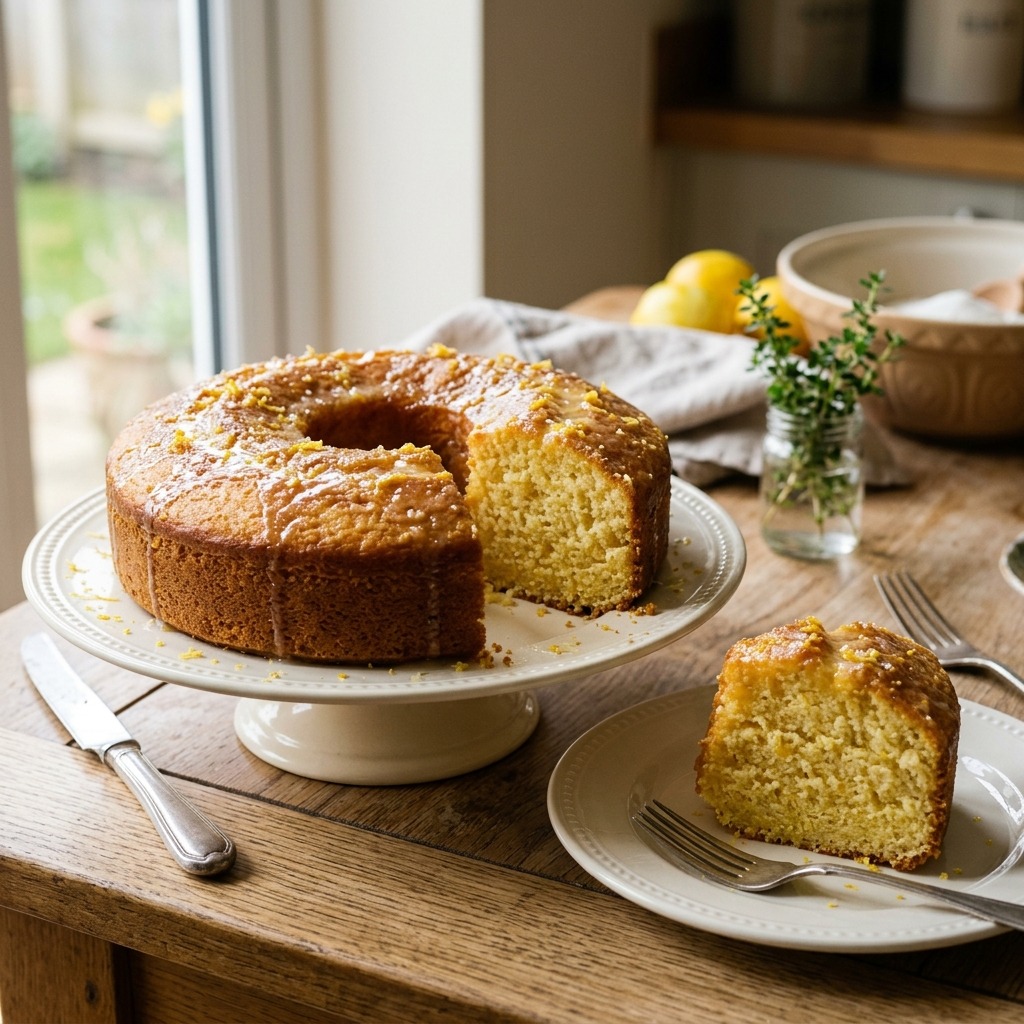
Mary Berry’s lemon drizzle cake is a classic British sponge baked with butter, caster sugar, self-raising flour, eggs, milk, and fresh lemon zest. Once baked, a granulated sugar and lemon juice glaze is poured over the warm cake, soaking in to create a signature moist crumb with a satisfying crunchy top. Total time: under 1 hour.
Few British bakes carry the cultural weight of a lemon drizzle cake. Tangy, buttery, and topped with a golden crunchy glaze, it has consistently ranked as one of the UK’s most beloved teatime treats a Telegraph poll found that 40% of Brits choose lemon drizzle over any other cake with their afternoon tea. And no name is more closely associated with this classic than Mary Berry.
Berry has been baking her lemon drizzle traybake since the 1960s. According to BBC Food, it’s the recipe she’s most often asked about when stopped in the street. That kind of staying power isn’t an accident. Her version is straightforward, forgiving, and consistently delicious which is exactly why home bakers return to it again and again.
What Makes Mary Berry’s Lemon Drizzle Cake Special
Most lemon cakes rely on a sugar glaze or a frosting applied after the cake has cooled. Mary Berry’s approach is different. The granulated sugar and lemon juice glaze goes on while the cake is still warm, allowing the juice to soak deep into the sponge while the sugar crystals sit on the surface and set into a crunch. That two-texture contrast moist interior, crunchy top is what defines the cake.
Her method is also notably simple. The traybake version uses an all-in-one technique: all ingredients beaten together in a single bowl for two minutes. No creaming butter separately. No resting the batter. This accessibility is part of what made her recipe a household name long before television did.
A Brief History of Lemon Drizzle Cake
The roots of lemon drizzle cake trace back to the pound cake, a staple of British and American baking since the early 1700s. But the modern drizzle cake as we know it baked in a loaf tin and doused with warm lemon syrup first appeared in the July 1967 edition of The Jewish Chronicle, credited to food writer Evelyn Rose, who called her version “Luscious Lemon Cake.” Mary Berry began making her own traybake variation around the same era, and her repeated television appearances on the Great British Bake Off and her BBC specials cemented the recipe in British baking culture permanently.
Recipe Overview
|
Detail |
Info |
|
Prep Time |
15 minutes |
|
Cook Time |
25–55 minutes (varies by tin) |
|
Total Time |
40–70 minutes |
|
Difficulty |
Easy |
|
Calories |
~290 kcal per serving |
|
Storage |
3–5 days airtight at room temp |
|
Freezer-Friendly |
Yes, up to 2 months |
Mary Berry’s Lemon Drizzle Cake Ingredients
These measurements follow the official BBC recipe for the classic traybake (makes 18 squares).
For the sponge:
- 225g (8oz) unsalted butter or baking spread, softened, plus extra for greasing
- 225g (8oz) caster sugar
- 275g (10oz) self-raising flour
- 1 level tsp baking powder
- 4 large free-range eggs, at room temperature
- 4 tbsp whole milk
- Finely grated zest of 2 unwaxed lemons
For the lemon drizzle glaze:
- 175g (6oz) granulated sugar (not caster granulated creates the crunchy finish)
- Juice of 2 lemons
Why unwaxed lemons? Waxed lemons are coated in food-grade wax that can affect the flavor of the zest. If you can only find waxed lemons, scrub them thoroughly in hot water with a brush before zesting.
Equipment You’ll Need
- 30x23cm (12x9in) traybake tin (classic version), or 2lb/900g loaf tin, or 20cm round tin
- Baking paper
- Electric hand mixer or stand mixer
- Pastry brush (for applying the glaze)
- Wire cooling rack
- Mixing bowl and sieve
Step-by-Step Instructions (Classic Traybake)
- Preheat your oven to 180°C/160°C Fan/Gas 4. Grease the traybake tin and line the base with baking paper.
- Combine all sponge ingredients into a large mixing bowl butter, sugar, flour, baking powder, eggs, milk, and lemon zest.
- Beat for 2 minutes with an electric mixer until smooth and well combined. Scrape down the sides at least once.
- Transfer the batter into the prepared tin and level the top with a spatula.
- Bake for 25–30 minutes, until golden and the cake springs back when lightly pressed in the center.
- Make the glaze while the cake bakes: stir the granulated sugar into the lemon juice until you have a runny, grainy paste. Mix it just before using so the sugar doesn’t fully dissolve.
- Cool for 5 minutes in the tin, then lift out (with the paper still attached) onto a wire rack set over a tray.
- Brush the glaze generously over the warm cake. Use all of it. Let it set before cutting.
Loaf Tin, Round Cake, and Traybake: What Changes?
This is one of the most searched questions about this recipe and one of the least well answered by competing sites. Here’s what actually changes:
|
Tin Type |
Tin Size |
Bake Time |
Servings |
Texture Notes |
|
Traybake (classic Mary Berry) |
30x23cm |
25–30 min |
18 squares |
Shallow depth, max glaze absorption |
|
Loaf tin |
2lb/900g |
45–55 min |
10–12 slices |
Denser center, taller rise |
|
Round tin |
20cm |
35–40 min |
8–10 slices |
Deeper sponge, great for slicing |
For the loaf tin version, reduce the recipe quantities slightly: use 175g each of butter, sugar, and flour with 3 eggs (rather than 4). Bake at 180°C for 45–50 minutes, testing with a skewer at the 40-minute mark. The key trick for a loaf cake is to poke small holes in the surface before applying the glaze so it penetrates deeper.
For the round tin, the standard full-batch quantities work well. Check at 35 minutes and continue until a skewer inserted in the center comes out clean.
Easy vs. Classic: Which Version Should You Make?
Easy version: Use the all-in-one method (all ingredients in one bowl, beat for 2 minutes). Best for beginners or when you’re short on time. This is essentially Mary Berry’s original traybake approach.
Classic version: Cream the butter and sugar first until pale and fluffy (4–5 minutes), then add eggs one at a time, then fold in the flour. This produces a slightly finer crumb with a little more lift ideal for a loaf or round cake where texture is more noticeable.
For most home bakers, the all-in-one method delivers excellent results without the extra steps.
Ingredient Substitutions and Dietary Alternatives
|
Original Ingredient |
Substitution |
Notes |
|
Self-raising flour |
Plain flour + 1.5 tsp baking powder + pinch of salt per cup |
Measure carefully |
|
Butter |
Dairy-free spread (e.g. Flora Plant) |
Same quantity |
|
Milk |
Oat milk or almond milk |
Works equally well |
|
Eggs |
Flax eggs (1 tbsp ground flaxseed + 3 tbsp water, per egg) |
For a vegan version |
|
Self-raising flour |
Gluten-free SR flour blend (1:1) |
Results in a slightly denser crumb |
|
Granulated sugar (drizzle) |
Keep as granulated |
Do not use icing sugar it won’t create the crunchy finish |
What Are Some Popular Variations of Lemon Drizzle Cake?
Once you’ve mastered the classic, these variations are worth exploring:
- Lemon and elderflower: Add 2 tbsp elderflower cordial to the glaze in place of some lemon juice.
- Lemon and poppy seed: Fold 2 tbsp poppy seeds into the batter.
- Lemon and lavender: Add 1 tsp dried culinary lavender to the sugar before creaming.
- Orange drizzle cake: Swap lemon zest and juice for orange—use one large orange for the glaze.
- Lime drizzle: Substitute lime zest and juice for a sharper, more tropical finish. Mary Berry herself mentions this variation in her BBC tips.
- Mini loaf cakes: Divide the batter into a 4-hole mini loaf tin. Bake for 20–25 minutes. Perfect for gifting or lunchboxes.
Mary Berry’s Top Baking Tips
- Apply the glaze while the cake is still warm. This is non-negotiable. A cold cake won’t absorb the syrup properly.
- Use granulated sugar, not caster or icing sugar, for the glaze. The coarser texture dissolves partially but leaves a slightly gritty, crunchy layer on the surface.
- Don’t over-mix after the flour goes in. Incorporate until just smooth to avoid a tough crumb.
- If you don’t have an electric mixer, a wooden spoon and some elbow grease work fine. Just beat more vigorously.
- For clean slices, wait until the glaze has fully set before cutting.
- Use room-temperature ingredients throughout. Cold butter won’t cream properly and cold eggs can cause the batter to split.
Troubleshooting: Common Problems and How to Fix Them
The cake sinks in the middle:
Check that your baking tin isn’t too small. Batter should fill no more than ⅔ of the tin. Opening the oven door too early is another common cause don’t check before the 20-minute mark.
The glaze doesn’t soak in:
The cake was likely too cool. Apply the glaze within 5–10 minutes of removing the cake from the oven.
The cake is dry:
This usually comes from overbaking. Start checking 5 minutes before the stated time. A skewer should come out clean but not dried out.
The top is too dark but the inside is undercooked:
Oven temperature is too high. If your oven runs hot, drop by 10°C and tent the cake loosely with foil after the first 20 minutes.
Make-Ahead, Storage, and Freezing
Storage: Keep in an airtight container at room temperature for 3–5 days. Do not refrigerate the cold air dries out the sponge and the crunch softens.
Make-ahead: This cake keeps well, so baking a day ahead is fine. The glaze sets firmer overnight, which many bakers actually prefer.
Freezing: Allow the glazed cake to cool completely. Wrap in baking paper, then two layers of foil. Label and freeze for up to 2 months. To thaw, remove the foil and leave the wrapped cake on a cooling rack at room temperature for 2–3 hours. You can also freeze individual portions for up to 1 month ideal for packed lunches.
Nutrition Per Serving (Traybake, 18 Squares)
Based on the official BBC recipe, each square provides approximately:
- 290 kcal
- 4g protein
- 38.5g carbohydrates (of which 25g sugars)
- 13.5g fat (of which 8g saturates)
- 0.7g fibre
- 0.6g salt
Frequently Asked Questions
What is the original Mary Berry lemon drizzle cake recipe?
Mary Berry’s original recipe uses 225g each of butter and caster sugar, 275g self-raising flour, 4 eggs, 4 tbsp milk, and the zest of 2 lemons. The glaze uses 175g granulated sugar and the juice of 2 lemons. It bakes in a 30x23cm traybake tin at 180°C for 25–30 minutes.
Why does Mary Berry use granulated sugar for the drizzle instead of icing sugar?
Granulated sugar dissolves only partially in the lemon juice, leaving sugar crystals on the surface as it sets. This creates the signature crunchy top. Icing sugar fully dissolves and dries to a smooth glaze still tasty, but without the crunch.
Can I make Mary Berry’s lemon drizzle cake in a loaf tin?
Yes. Reduce the quantities to 175g each of butter, sugar, and flour with 3 eggs. Bake in a 2lb/900g loaf tin at 180°C for 45–55 minutes. Poke small holes in the surface before applying the glaze to help it absorb.
How long does Mary Berry’s lemon drizzle cake keep?
Stored in an airtight container at room temperature, it keeps for 3–5 days. Avoid refrigerating it dries out the sponge and softens the crunchy glaze.
Can you freeze Mary Berry’s lemon drizzle cake?
Yes. Cool completely, wrap in baking paper and two layers of foil, and freeze for up to 2 months. Thaw at room temperature for 2–3 hours. Individual portions freeze for up to 1 month.
Why did my lemon drizzle cake turn out dry?
Overbaking is the most common cause. Start checking 5 minutes before the recipe’s stated time using a skewer. If your oven runs hot, drop the temperature by 10°C and check earlier than the stated baking time.
Can I make a gluten-free version of Mary Berry’s lemon drizzle cake?
Yes. Substitute the self-raising flour with a gluten-free self-raising flour blend at a 1:1 ratio. The crumb will be slightly denser but the flavor remains excellent. Ensure your baking powder is also certified gluten-free.
What is the difference between the traybake and loaf tin versions?
The traybake is shallower, bakes faster (25–30 minutes), and produces 18 portions. The loaf tin creates a taller cake that bakes for 45–55 minutes and slices into 10–12 portions. The loaf version benefits from holes poked in the top before the glaze is applied.
Do I need to use unwaxed lemons?
For zesting, unwaxed lemons are strongly recommended waxed lemon zest can introduce an off taste. If only waxed lemons are available, scrub them under hot water with a brush before zesting. For juice only (not zest), waxed lemons are fine.
How do I make a dairy-free version of this recipe?
Replace the butter with a plant-based baking spread at the same quantity, and substitute the milk with oat milk or almond milk in equal measure. The rest of the recipe remains unchanged. The texture is very close to the original.
Mary Berry Lemon Drizzle Cake: Classic Recipe, Tips & Variations
Ingredients
Instructions
-
preheat your oven
Preheat your oven to 180°C/160°C Fan/Gas 4. Grease the traybake tin and line the base with baking paper. -
combine all ingredients
Combine all sponge ingredients into a large mixing bowl butter, sugar, flour, baking powder, eggs, milk, and lemon zest. -
Beat for 2 mint
Beat for 2 minutes with an electric mixer until smooth and well combined. Scrape down the sides at least once. -
transfer the batter
Transfer the batter into the prepared tin and level the top with a spatula. -
Bake for 30 minutes
Bake for 25–30 minutes, until golden and the cake springs back when lightly pressed in the center. -
Make the glaze
Make the glaze while the cake bakes: stir the granulated sugar into the lemon juice until you have a runny, grainy paste. Mix it just before using so the sugar doesn't fully dissolve. -
cool for 5 minutes
Cool for 5 minutes in the tin, then lift out (with the paper still attached) onto a wire rack set over a tray. -
Brush the glaze
Brush the glaze generously over the warm cake. Use all of it. Let it set before cutting.