Mary Berry’s Yorkshire pudding recipe uses 100g plain flour, 3 large free-range eggs, 225ml semi-skimmed milk, and 4 tbsp sunflower oil. The batter is rested, then poured into piping-hot oil and baked at 220°C for 20–25 minutes. The result is tall, golden, crispy-edged puddings with a light, airy center rated 4.7/5 by over 350 home bakers on BBC Food.
Few British dishes trigger as much anxiety as Yorkshire puddings. You follow what seems like a simple recipe, and still end up with flat, pale discs instead of the towering, golden puffs you were hoping for. The good news? Mary Berry has been making them for decades, and her method developed through years of testing on Mary Berry Cooks (BBC Two) removes almost all the guesswork.
What Is the History Behind Yorkshire Puddings?
Yorkshire pudding traces back to Northern England, where cooks placed a pan of batter beneath a roasting joint to catch the dripping fat. The earliest printed reference appeared in 1737 in The Whole Duty of a Woman under the name “dripping pudding.” Hannah Glasse renamed it “Yorkshire pudding” in her 1747 cookbook The Art of Cookery Made Plain and Simple, and the name has stuck ever since.
Originally served before the main course with gravy, the pudding’s purpose was practical filling hungry workers cheaply before the expensive meat arrived. As the saying went: “Them ‘at eats t’most pudding gets t’most meat.”
Today, Yorkshire pudding ranks among Britain’s most beloved foods, placing 10th in a national poll of the 50 things people love most about Great Britain. National Yorkshire Pudding Day falls on the first Sunday of February each year.
Why Is Mary Berry’s Yorkshire Pudding Recipe Different From Others?
The biggest point of difference is her egg-to-milk ratio. Mary uses more eggs and less milk than most other recipes, which produces a batter with more structure and a better rise.
|
Chef |
Milk per Egg |
Notes |
|
Mary Berry |
75ml |
Higher egg ratio for better rise |
|
Nigella Lawson |
81ml |
Slightly more milk |
|
Gordon Ramsay |
50ml |
Lowest milk, very egg-heavy |
Mary also specifically recommends semi-skimmed milk. If you only have full-fat, she advises replacing a quarter of it with water the extra fat can weigh the batter down and reduce the rise.
Mary Berry’s Yorkshire Pudding Recipe (BBC Food)
Recipe Overview
|
Detail |
Info |
|
Prep Time |
Under 30 minutes |
|
Cook Time |
20–25 minutes |
|
Resting Time |
30 min–2 hours (recommended) |
|
Servings |
6 (or 12 small puddings) |
|
Calories per Serving |
197 kcal |
|
Difficulty |
Easy |
|
Rating |
4.7/5 (352 ratings, BBC Food) |
Ingredients
- 100g / 3½oz plain flour
- ¼ tsp salt
- 3 large free-range eggs
- 225ml / 8fl oz semi-skimmed milk
- 4 tbsp sunflower oil
Equipment Needed
- 12-hole deep bun tin, two 4-hole Yorkshire pudding tins, or a large roasting tin
- Electric hand whisk or wooden spoon
- Heatproof jug for pouring
Step-by-Step Instructions
- Preheat the oven to 220°C / 200°C Fan / Gas 7.
- Mix the batter: Combine flour and salt in a bowl. Make a well in the center, add the eggs and a small amount of milk, then whisk until smooth. Gradually add the remaining milk. Pour into a jug.
- Rest the batter: Leave at room temperature for at least 30 minutes, up to 2 hours (or overnight in the fridge). This step is not essential, but it significantly improves the rise.
- Heat the oil: Add 1 tsp oil to each hole of a 12-hole bun tin (or 1 tbsp to each hole of a 4-hole tin). Place in the oven for 5–10 minutes until the oil is piping hot this is the most critical step.
- Pour and cook: Carefully remove the tin from the oven and quickly pour the batter into the holes. Return immediately to the oven and bake for 20–25 minutes (35 minutes for a large roasting tin) until well-risen and deep golden brown.
- Serve immediately.
Nutrition per Serving
|
Nutrient |
Per Serving |
|
Calories |
197 kcal |
|
Protein |
7g |
|
Carbohydrates |
14.5g |
|
Fat |
12g |
|
Saturated Fat |
3g |
|
Fibre |
0.7g |
|
Salt |
0.3g |
What Are Mary Berry’s Top Tips for Perfect Yorkshire Puddings?
- Hot oil is non-negotiable. The batter must sizzle the instant it hits the tin. If it doesn’t, your puddings will be flat.
- Don’t open the oven door. A drop in temperature will cause the puddings to collapse before the structure sets.
- Rest the batter. Resting allows gluten to relax and become more elastic this gives a better rise. Aim for at least 30 minutes.
- Check batter consistency. It should be about as thick as double cream pourable, but with some body.
- Cook until deeply golden. If you pull them out too early, they’ll sink. Wait until they’re a fairly dark golden brown before removing from the oven.
What Are the Most Common Yorkshire Pudding Mistakes to Avoid?
|
Mistake |
Why It Happens |
Fix |
|
Flat puddings |
Oil wasn’t hot enough |
Heat oil 5–10 minutes until smoking |
|
Puddings collapse |
Oven door opened during baking |
Don’t open the oven until time is up |
|
Pale and soggy |
Oven temperature too low |
Always use 220°C / 200°C Fan |
|
Dense, rubbery texture |
Batter over-mixed or under-rested |
Rest batter 30 minutes minimum |
|
Uneven rise |
Batter poured unevenly |
Use a jug and pour quickly and evenly |
What Ingredient Substitutions Work in This Recipe?
Gluten-free: Swap plain flour for a gluten-free plain flour blend. Results may be slightly less crispy but still rise well.
Dairy-free: Replace semi-skimmed milk with an unsweetened plant-based milk such as oat milk or soy milk. Avoid coconut milk the fat content is too high.
Oil alternatives: Sunflower oil is recommended for its high smoke point. Vegetable oil works equally well. For a more traditional flavour, use beef dripping the original fat used in the historic “dripping pudding.”
Self-raising flour: Do not use it. The raising agents produce flat, dense puddings. Plain flour only.
How Can You Make Mary Berry Yorkshire Puddings Ahead and Store Them?
Bake the puddings fully, let them cool completely, then store in an airtight container for up to 2 days.
Freeze: Freeze cooled puddings in a zip-lock bag or airtight container for up to 1 month.
Reheat from chilled: Place in a hot oven (220°C) for about 8 minutes until crispy and heated through.
Reheat from frozen: Cook from frozen at 180°C for approximately 10 minutes for muffin-sized puddings.
What Are the Best Serving Suggestions for Yorkshire Puddings?
The classic pairing is roast beef, roasted potatoes, seasonal vegetables, and a rich brown gravy. But Yorkshire puddings are far more versatile than the Sunday roast tradition suggests:
- Toad in the Hole: Bake sausages inside a large Yorkshire pudding and serve with onion gravy
- Yorkshire pudding wrap: Fill with roast beef, veggies, and gravy a northern street food trend
- Giant pudding bowl: Use as an edible bowl filled with an entire Sunday roast
- Sweet leftovers: Reheat with jam, fruit, or golden syrup for a traditional thrifty dessert
Can You Make Yorkshire Puddings in an Air Fryer?
Yes. Cook Yorkshire pudding batter in an air fryer at 180°C for 10–12 minutes. Preheat the air fryer basket with a small amount of oil before adding the batter, just as you would with a conventional oven. Results are slightly less dramatic in height compared to a conventional oven but are still crispy and well-cooked.
Frequently Asked Questions
What is the secret to making Mary Berry’s Yorkshire puddings rise?
Mary Berry uses more eggs and less milk than most recipes 75ml of milk per egg because eggs trap air and support the rise. Piping-hot oil is equally essential. The moment cold batter hits the hot fat, it begins to set at the edges and rise rapidly.
Should you let Mary Berry’s Yorkshire pudding batter rest?
Resting is recommended but not essential. Mary Berry advises resting the batter for at least 30 minutes at room temperature, or up to 2 hours. Resting allows the gluten to relax, making the batter more elastic and improving the final rise.
Why do Yorkshire puddings rise then go flat?
This typically happens because the oven door was opened during baking, disrupting the heat, or because the puddings were removed before the structure fully set. Always wait until the puddings are a deep golden brown before opening the oven.
Can you use self-raising flour for Yorkshire puddings?
No. Self-raising flour contains raising agents that interfere with the steam-based rise mechanism and result in flat, unrisen puddings. Plain flour is required for the best results.
What is the best oil for Mary Berry’s Yorkshire pudding recipe?
Sunflower oil is Mary Berry’s choice, and for good reason its high smoke point means it gets hot enough to create an immediate sizzle when batter hits the tin. Vegetable oil is a reliable substitute. Beef dripping adds the most traditional flavour.
How long do Mary Berry’s Yorkshire puddings last?
Freshly made puddings are best eaten immediately. If storing, keep them in an airtight container at room temperature for up to 2 days, or freeze for up to 1 month.
Can you make Mary Berry’s Yorkshire puddings gluten-free?
Yes. Replace the plain flour with a gluten-free plain flour blend. The texture may be slightly less crispy, but the puddings will still rise and hold their shape when baked correctly.
What’s the difference between Yorkshire pudding batter consistency and pancake batter?
Yorkshire pudding batter should be thicker than pancake batter about the consistency of double cream. It should be easily pourable but have enough body to hold air during baking. Pancake batter is thinner and produces a different texture entirely.
Can Mary Berry’s Yorkshire puddings be cooked in an air fryer?
Yes. Preheat a small amount of oil in the air fryer basket, add the batter, and cook at 180°C for 10–12 minutes. The results are slightly shorter than oven-baked versions but still crispy and golden.
Why does Mary Berry recommend semi-skimmed milk in her Yorkshire pudding recipe?
Semi-skimmed milk has less fat than full-fat, which prevents the batter from being weighed down. Lower fat content allows the eggs to do their job of trapping air and supporting the rise. If only full-fat milk is available, replace a quarter of it with water.
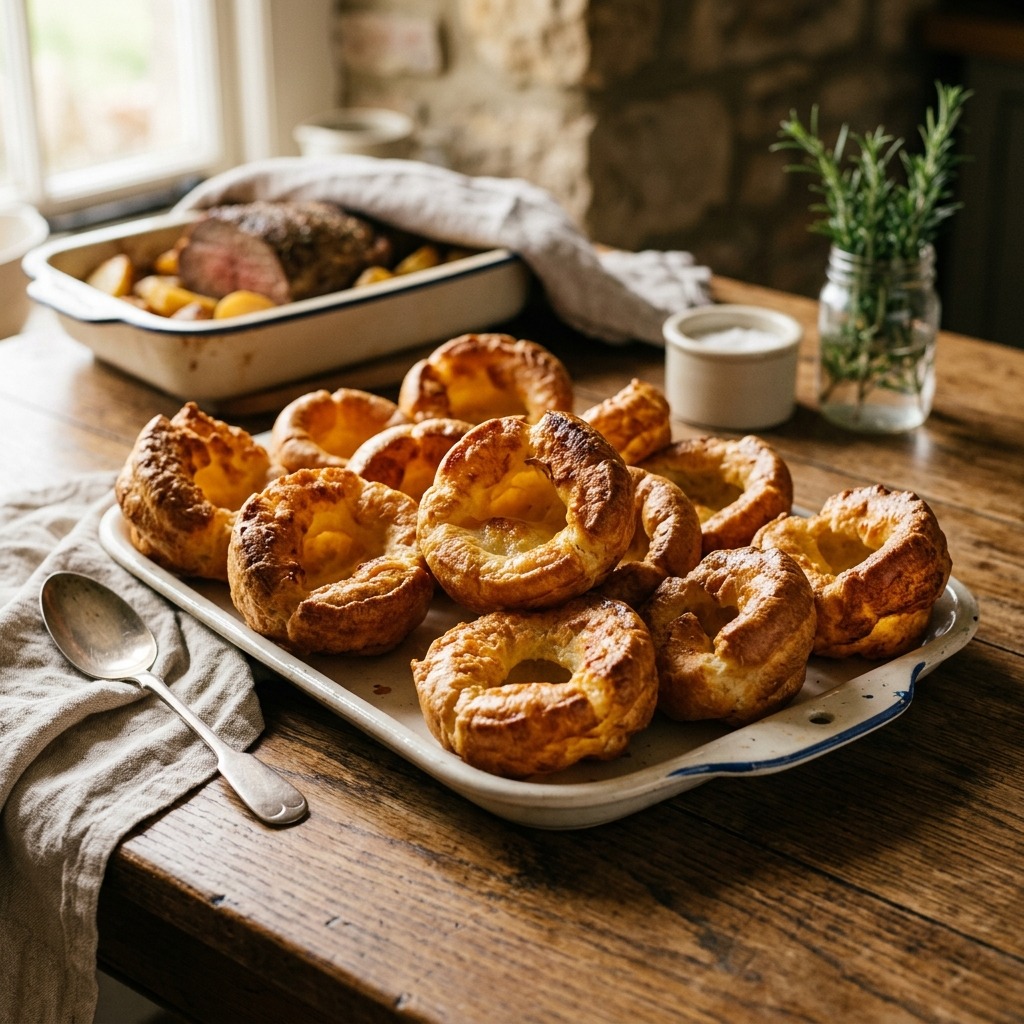
Mary Berry Yorkshire Puddings: Crispy, Golden and Perfect
Ingredients
Instructions
-
preheat your oven
Preheat the oven to 220°C / 200°C Fan / Gas 7. -
combine all ingredients
Mix the batter: Combine flour and salt in a bowl. Make a well in the center, add the eggs and a small amount of milk, then whisk until smooth. Gradually add the remaining milk. Pour into a jug. -
Rest the batter
Rest the batter: Leave at room temperature for at least 30 minutes, up to 2 hours (or overnight in the fridge). This step is not essential, but it significantly improves the rise. -
heat the oil
Heat the oil: Add 1 tsp oil to each hole of a 12-hole bun tin (or 1 tbsp to each hole of a 4-hole tin). Place in the oven for 5–10 minutes until the oil is piping hot this is the most critical step. -
pour and cook
Pour and cook: Carefully remove the tin from the oven and quickly pour the batter into the holes. Return immediately to the oven and bake for 20–25 minutes (35 minutes for a large roasting tin) until well-risen and deep golden brown. -
serve immediately
Serve immediately.