Mary Berry Pavlova: Classic, Easy & Foolproof
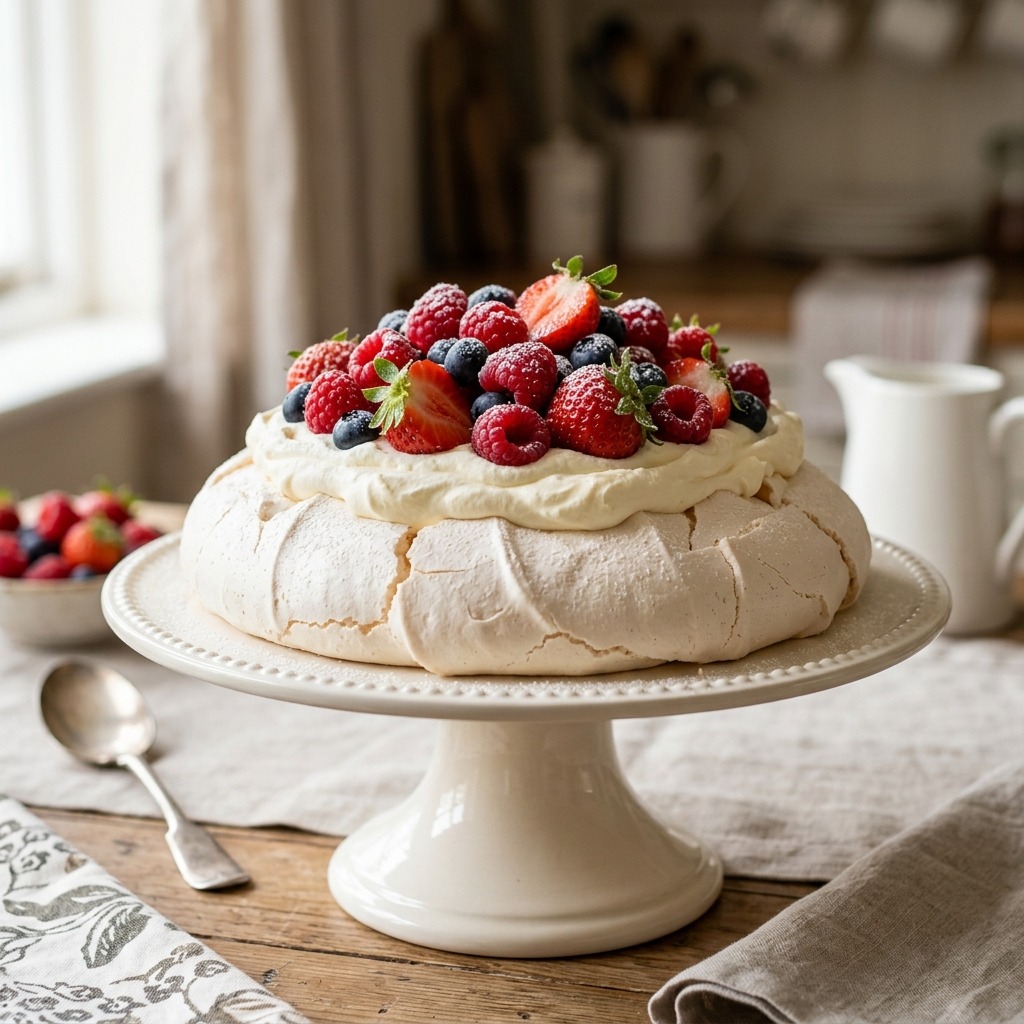
Mary Berry's pavlova is a classic British dessert with a crisp meringue shell, a soft marshmallow center, and a topping of whipped cream and fresh berries. Made with just 6 egg whites, caster sugar, cornflour, and white wine vinegar, it serves 12–15 people and takes around 30 minutes to prepare, plus 1–1.5 hours to bake.
Few desserts command as much quiet confidence as a pavlova fresh from the oven. Crisp on the outside, pillowy in the center, and piled high with cream and fruit it is the kind of showstopper that looks far more difficult than it actually is.
Mary Berry's version, featured on The Great British Bake Off and rated 4.8 out of 5 stars from over 100 ratings on BBC Food, has become the go-to recipe for home bakers across Britain and beyond. Her approach is measured and reliable: no shortcuts, but no unnecessary complexity either.
Recipe At a Glance
Detail
Classic Version
Easy Version
Prep Time
Under 30 mins
25 mins
Cook Time
1–1.5 hours
1 hour
Cooling Time
1 hour – overnight
1 hour
Serves
12–15
8
Difficulty
Easy–Medium
Easy
Dietary
Gluten-free, vegetarian
Gluten-free, vegetarian
Calories
~230 per serving
~345 per serving
What Makes Mary Berry's Pavlova Different from Other Recipes?
Most pavlova recipes follow a similar formula, so the difference usually comes down to technique and ratio. Mary Berry's classic version uses 6 large egg whites and 350g of caster sugar, producing a larger, sturdier meringue that serves a crowd. The addition of both white wine vinegar and cornflour is deliberate vinegar stabilizes the egg whites while cornflour encourages that signature marshmallow interior.
Her instruction to bake at a high temperature initially and then immediately reduce the heat is also a key detail many recipes omit. This two-temperature approach sets the outside quickly without drying out the center.
A Brief History: Where Does Pavlova Come From?
Pavlova was named after Russian ballerina Anna Pavlova, who toured Australia and New Zealand in 1926. Both countries claim the dessert as their own, but its exact origin remains debated. Mary Berry later helped popularize pavlova through The Great British Bake Off.
Mary Berry's Pavlova Ingredients
For the Classic Pavlova Base (Serves 12–15)
- 6 large free-range egg whites (room temperature)
- 350g (12oz) caster sugar
- 1 tsp white wine vinegar
- 1 tsp cornflour (cornstarch)
For the Easy Pavlova Base (Serves 8)
- 4 large egg whites (room temperature)
- 225g (1 cup) caster sugar
- 2 tsp cornflour (cornstarch)
- 2 tsp white wine vinegar
For the Filling
- 600ml (20fl oz) double cream
- 1 tsp vanilla bean paste
- 50g (1¾oz) icing sugar, sifted
- 200g (7oz) strawberries, hulled and quartered
- 300g (10½oz) raspberries
- 200g (7oz) blueberries
- 50g (1¾oz) pomegranate seeds
- A few fresh mint leaves (optional)
- Icing sugar, for dusting
Why Each Ingredient Matters
Ingredient
Function
Egg whites
Create the meringue structure; must be yolk-free
Caster sugar
Dissolves more easily than granulated, creates glossy peaks
Cornflour
Encourages a soft, marshmallow-like center
White wine vinegar
Stabilizes the egg whites and improves texture
Double cream
Provides a rich, whipped topping
Vanilla bean paste
Adds depth and flavor to the cream
Equipment You Will Need
- Stand mixer or electric hand whisk
- Large clean mixing bowl (grease-free)
- Large baking tray (at least 32cm/13in diameter)
- Non-stick baking paper
- Pencil or pen (for tracing the circle)
- Piping bag or large spoon
- Digital kitchen scales
Mary Berry's Pavlova Recipe: Classic Step-by-Step Instructions
Step 1 Preheat the Oven and Prepare Your Tray
Preheat the oven to 160°C / 140°C Fan / Gas 3 / 285°F. Line a large baking tray with non-stick baking paper. Draw a 30cm (12in) circle on the paper, then draw a 15cm (6in) circle in the center to create a ring shape for a wreath-style pavlova. Flip the paper over so the pen or pencil markings don't transfer to the meringue.
Step 2 Whisk the Egg Whites
Ensure your mixing bowl is completely clean and grease-free even a trace of fat will prevent the whites from reaching stiff peaks. Add the 6 egg whites and whisk on high speed until soft peaks form. The whites should look cloud-like and hold their shape briefly when the whisk is lifted.
Visual cue: The bowl can be turned upside down without the whites sliding out.
Step 3 Add the Sugar Gradually
With the mixer still running at maximum speed, add the caster sugar one tablespoon at a time. Take your time this process should take around 8–10 minutes. The finished meringue should be stiff, thick, and glossy.
Do not rush this step. Adding sugar too fast prevents the peaks from becoming fully stiff.
Step 4 Fold in the Vinegar and Cornflour
Mix the white wine vinegar and cornflour together in a small cup until smooth. Fold gently into the meringue using a large metal spoon. Do not whisk fold carefully to preserve the air you have built up.
Step 5 Shape and Bake
Spoon the meringue onto the traced ring on the baking paper. Use the back of a large spoon to create a shallow trench in the center where the cream and fruit will sit. Transfer to the oven and immediately reduce the temperature to 140°C / 120°C Fan / Gas 1 / 250°F.
Bake for 1 hour to 1 hour 15 minutes, until the outside is hard to the touch and still white. Turn the oven off and leave the pavlova inside ideally overnight to cool completely.
Step 6 Assemble and Serve
Whip the double cream, vanilla bean paste, and icing sugar together until stiff peaks form. Spoon the cream into the center trench of the cooled meringue. Arrange the strawberries, raspberries, blueberries, and pomegranate seeds on top. Dust with icing sugar, add a few mint leaves, and serve immediately.
Mary Berry's Pavlova Recipe Easy Version (4 Eggs)
For a smaller gathering, the easy version uses 4 egg whites and 225g of caster sugar. The method is identical, but bake on a 23cm circle and reduce the baking time to approximately 1 hour. This version serves 8 and is slightly simpler to manage for first-timers.
Ingredient Substitutions and Dietary Adaptations
Ingredient
Substitution
Caster sugar
Blitz granulated sugar briefly in a food processor
White wine vinegar
Lemon juice or apple cider vinegar (same quantity)
Cornflour
Arrowroot powder (same quantity)
Double cream
Whipping cream (slightly less rich)
Egg whites
Aquafaba (chickpea liquid) 3 tbsp per egg white for a vegan version
Pomegranate seeds
Passionfruit pulp or dried cranberries
Dairy-free option: Replace double cream with a chilled coconut cream, whipped until thick.
Gluten-free: This recipe is naturally gluten-free no substitutions needed.
Seasonal Topping Variations
One of the overlooked advantages of Mary Berry's pavlova is its versatility. The meringue base works beautifully with almost any fruit topping.
Season
Suggested Toppings
Spring
Strawberries, rhubarb compote, passionfruit
Summer
Mixed berries, peaches, nectarines, mango
Autumn
Poached pears, blackberries, spiced plums
Winter
Pomegranate seeds, clementine segments, lemon curd, toasted nuts
Mary Berry's tip: Choose something slightly tart to balance the sweetness of the meringue lemon curd, spiced plums, or stewed rhubarb all work well if fresh berries are out of season.
Cream and Flavor Variations
- Classic: Vanilla cream with mixed berries
- Lemon: Fold lemon curd through the whipped cream before spreading
- Chocolate: Add 2 tbsp sifted cocoa to the meringue mixture with the cornflour step
- Mascarpone cream: Replace half the cream with mascarpone for a thicker, richer topping
- Coffee cream: Add 1 tsp of espresso powder to the whipped cream
Mary Berry's Top Tips for Perfect Pavlova
- Yolk-free is non-negotiable. Any trace of egg yolk prevents stiff peaks. If yolk gets in, start again.
- Room temperature eggs whisk to a greater volume than cold eggs. Remove from the fridge 30 minutes before you begin.
- Add sugar slowly. Rushing this step is the most common reason meringues fail to reach glossy stiff peaks.
- Flip your baking paper. Draw your circle on one side, then flip pen or pencil markings can transfer to white meringue.
- Never open the oven door during cooling. The rapid change in temperature causes cracking and collapse.
- A large serving platter is essential. The pavlova will expand slightly in the oven allow at least 32cm in diameter.
- Top just before serving. Once cream and fruit are added, the meringue begins to soften. It is best eaten within a couple of hours of assembling.
How to Troubleshoot Common Pavlova Problems
Problem
Likely Cause
Solution
Meringue won't reach stiff peaks
Trace of yolk or fat in bowl
Start with a completely clean, dry bowl
Pavlova cracks heavily
Oven too hot or cooled too fast
Keep oven door closed during cooling; bake lower
Pavlova turns brown
Oven temperature too high
Check oven calibration; reduce by 10°C
Sticky/chewy base
Not baked or cooled long enough
Leave in switched-off oven overnight
Weeping (liquid pooling)
Sugar not fully dissolved
Add sugar more slowly; check for stiff, glossy finish
Flat meringue
Over-whisked egg whites
Stop whisking as soon as stiff peaks form
A little surface cracking is completely normal and is not a sign that something went wrong. It is part of pavlova's rustic charm.
How to Make Ahead, Store, and Freeze Mary Berry's Pavlova
Make-ahead: The meringue base can be made up to 1 month in advance. Store in an airtight container or well-sealed resealable bag in a cool, dry place. Humidity is the enemy of meringue, so avoid the fridge for the unfilled base.
Assembled pavlova: Once cream and fruit have been added, keep covered in the fridge and eat within 1–2 days. The meringue will soften over time.
Freezing: The bare meringue base can be frozen for up to 1 month. Wrap carefully to prevent moisture contact. Defrost at room temperature before assembling.
Serving Suggestions
- Dust with icing sugar just before bringing to the table
- Serve on a large cake stand or flat board for visual impact
- Keep some berries in a separate bowl on the side for guests to help themselves
- Pair with a chilled dessert wine, Prosecco, or elderflower cordial
- Cut into wedges using a sharp serrated knife
Nutrition Information (Approximate Per Serving Classic Recipe, Serves 12)
Nutrient
Per Serving
Calories
~380 kcal
Carbohydrates
~42g
Sugars
~40g
Fat
~20g
Saturated Fat
~12g
Protein
~4g
Gluten
None
Nutrition values are approximate and will vary depending on fruit topping and cream quantity used.
Frequently Asked Questions
How many egg whites does Mary Berry use in her pavlova?
Mary Berry's classic pavlova recipe uses 6 large free-range egg whites. An easier smaller version uses 4 egg whites and is suitable for 8 servings. The classic version serves 12–15 people and is better suited to larger gatherings or celebrations.
Why does Mary Berry add vinegar and cornflour to pavlova?
White wine vinegar stabilizes the egg whites during whisking, while cornflour slows moisture release during baking. Together, they create the pavlova's defining texture: a crisp outer shell with a soft, marshmallow-like interior. Without both, the meringue is more likely to collapse or dry out.
What temperature does Mary Berry bake her pavlova at?
Mary Berry starts the pavlova at 160°C / 140°C Fan / Gas 3 (285°F), then immediately reduces the temperature to 140°C / 120°C Fan / Gas 1 (250°F) once it goes into the oven. This two-temperature method sets the outside quickly while preserving the soft center.
How long should you leave pavlova in the oven after baking?
After switching off the oven, leave the pavlova inside for at least 1 hour ideally overnight. Keeping the oven door closed prevents rapid temperature changes that cause cracking and collapse. The longer the cool, the crisper and drier the meringue base.
Can Mary Berry's pavlova be made the day before?
Yes. The unfilled meringue base can be made up to 1 month in advance and stored in an airtight container. Add the cream and fruit no more than a few hours before serving, as the cream and fruit cause the meringue to soften quickly.
Why did my pavlova turn brown instead of staying white?
Brown pavlova is usually caused by an oven temperature that is too high. Check your oven with a thermometer, as many home ovens run hotter than indicated. Try reducing the temperature by 10°C and extend the baking time slightly to compensate.
Can you make Mary Berry's pavlova without a stand mixer?
Yes. A handheld electric whisk works perfectly well. It may take slightly longer to reach stiff peaks allow 10–12 minutes of whisking time on high speed. A balloon whisk by hand is possible in theory but extremely difficult in practice.
Is Mary Berry's pavlova gluten-free?
Yes. Mary Berry's pavlova is naturally gluten-free. The four main meringue ingredients egg whites, caster sugar, cornflour, and white wine vinegar contain no gluten. Always check labels on cornflour if cross-contamination is a concern.
Can you freeze pavlova?
The unfilled meringue base can be frozen for up to 1 month. Wrap it carefully in cling film and place in an airtight container. Defrost at room temperature for a few hours before assembling. Do not freeze assembled pavlova with cream and fruit.
What can I use instead of double cream on pavlova?
Whipping cream is the closest substitute and produces a very similar result. For a dairy-free alternative, use chilled coconut cream, whipped until thick. For a richer, more stable topping, replace half the double cream with mascarpone cheese before whipping.
- 6 large free-range egg whites, room temperature
- 350 g caster sugar (12oz)
- 1 tsp white wine vinegar
- 1 tsp cornflour (cornstarch)
- Easy Pavlova Base (Serves 8)
- 4 large egg whites, room temperature
- 225 g caster sugar (1 cup)
- 2 tsp cornflour (cornstarch)
- 2 tsp white wine vinegar
- 1 Preheat the OvenStep 1 Preheat the Oven and Prepare Your Tray
- 2
Preheat the oven to 160°C / 140°C Fan / Gas 3 / 285°F. Line a large baking tray with non-stick baking paper. Draw a 30cm (12in) circle on the paper, then draw a 15cm (6in) circle in the center to create a ring shape for a wreath-style pavlova. Flip the paper over so the pen or pencil markings don't transfer to the meringue.- 3
Whisk the Egg WhitesStep 2 Whisk the Egg Whites- 4
Ensure your mixing bowl is completely clean and grease-free even a trace of fat will prevent the whites from reaching stiff peaks. Add the 6 egg whites and whisk on high speed until soft peaks form. The whites should look cloud-like and hold their shape briefly when the whisk is lifted.- 5
Visual cue: The bowl can be turned upside down without the whites sliding out.- 6
Add the Sugar GraduallyStep 3 Add the Sugar Gradually- 7
With the mixer still running at maximum speed, add the caster sugar one tablespoon at a time. Take your time this process should take around 8–10 minutes. The finished meringue should be stiff, thick, and glossy.- 8
Do not rush this step. Adding sugar too fast prevents the peaks from becoming fully stiff.- 9
Fold in the Vinegar and CornflourStep 4 Fold in the Vinegar and Cornflour- 10
Mix the white wine vinegar and cornflour together in a small cup until smooth. Fold gently into the meringue using a large metal spoon. Do not whisk fold carefully to preserve the air you have built up.- 11
Shape and BakeStep 5 Shape and Bake- 12
Spoon the meringue onto the traced ring on the baking paper. Use the back of a large spoon to create a shallow trench in the center where the cream and fruit will sit. Transfer to the oven and immediately reduce the temperature to 140°C / 120°C Fan / Gas 1 / 250°F.- 13
Bake for 1 hour to 1 hour 15 minutes, until the outside is hard to the touch and still white. Turn the oven off and leave the pavlova inside ideally overnight to cool completely.- 14
Assemble and ServeStep 6 Assemble and Serve- 15
Whip the double cream, vanilla bean paste, and icing sugar together until stiff peaks form. Spoon the cream into the center trench of the cooled meringue. Arrange the strawberries, raspberries, blueberries, and pomegranate seeds on to - 2