
Mary Berry Christmas Cake: Classic Recipe, Tips & Feeding Schedule
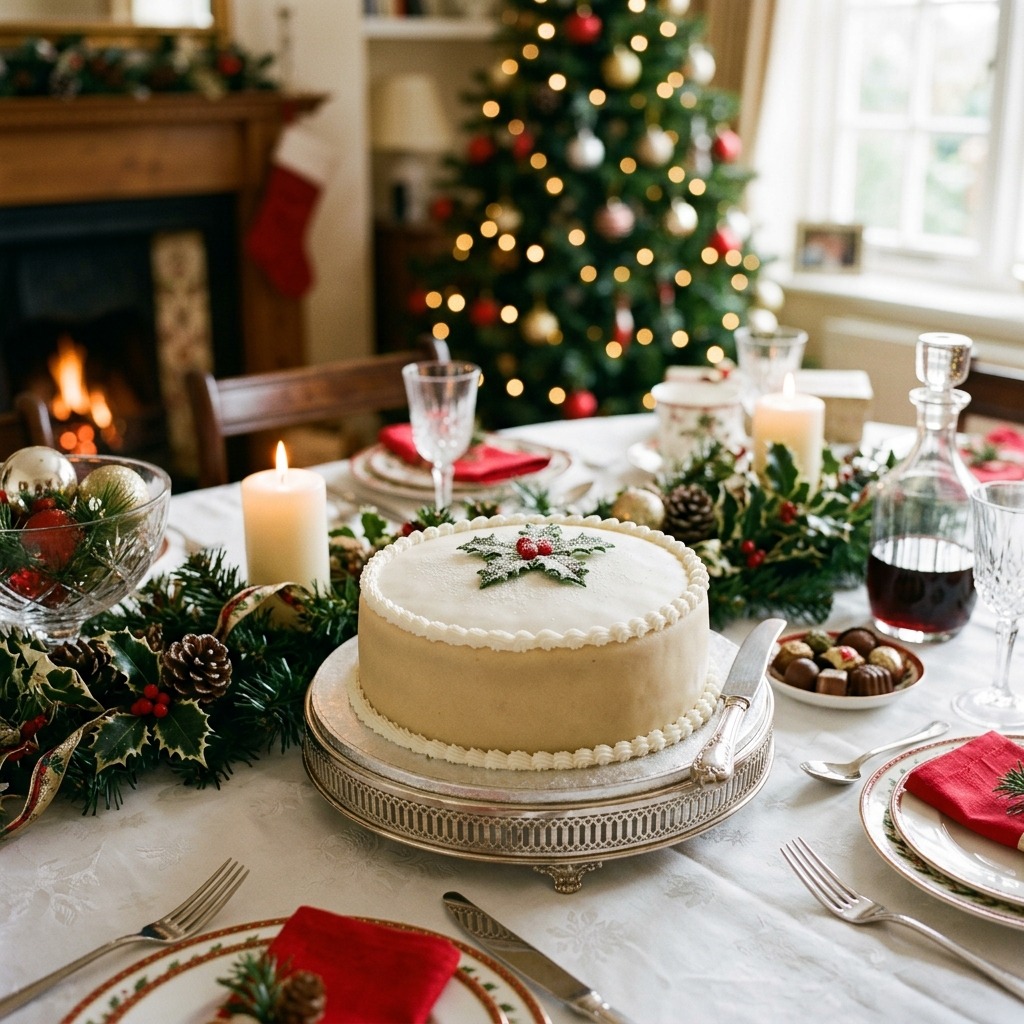
Mary Berry's classic Christmas cake is a rich, moist British fruit cake loaded with currants, sultanas, raisins, and glacé cherries soaked in brandy, bound together with dark muscovado sugar and black treacle. Baked low and slow at 140°C for 4–4.5 hours, it keeps for up to 3 months making it the most reliably make-ahead festive bake in British tradition.
How Do You Make Mary Berry's Christmas Cake?
Soak 500g currants, 350g sultanas, 175g raisins, and 350g glacé cherries in 150ml brandy for 3 days. Beat 250g softened butter, 250g muscovado sugar, 4 eggs, and 1 tbsp black treacle. Fold in 275g plain flour, 1½ tsp mixed spice, 75g almonds, and the soaked fruit. Bake in a lined 23cm round tin at 140°C/120°C Fan for 4–4.5 hours. Feed with brandy weekly until Christmas.
What Makes Mary Berry's Christmas Cake So Special?
Mary Berry has been making this Christmas cake since before Paul Hollywood knew how to hold a whisk and that longevity speaks for itself. Her recipe, originally featured on The Great British Bake Off Christmas Masterclass on BBC One, has since earned a 4.7 out of 5 stars from 251 reviews on BBC Food. It strikes the exact balance that makes a great fruit cake: deeply rich, packed with boozy dried fruit, and dense enough to slice cleanly while still staying moist weeks after baking.
What separates this from generic fruit cake recipes is the three-day fruit-soaking method, the use of black treacle for depth and color, and the discipline of feeding the cooled cake with brandy at regular intervals. These aren't optional flourishes they're what transform a simple bake into something that genuinely improves with time.
How Did This Recipe Become a British Institution?
The British Christmas cake has roots going back centuries. It evolved from a spiced plum porridge eaten on Christmas Eve to line stomachs after religious fasting. Over time, oatmeal was replaced with flour, dried fruits, and eggs creating the dense, storable fruit cake we recognize today. The tradition of baking on "Stir-up Sunday" the last Sunday before Advent became a beloved annual ritual, with every family member taking a turn stirring the mixture and making a wish.
Mary Berry, who celebrated her 90th birthday in March 2025, has done more than almost anyone to keep this tradition alive. Through her books, television appearances, and her iconic role on The Great British Bake Off, she has introduced the recipe to generations of home bakers who might otherwise have reached for the supermarket version.
Recipe Overview Table
Detail
Information
Prep Time
30 min + 3 days soaking
Cook Time
4–4.5 hours
Servings
16 (BBC classic version)
Difficulty
Easy
Calories
~304 kcal per serving
Storage
Up to 3 months
Best Made
At least 3 weeks before Christmas
Rating (BBC Food)
4.7/5 from 251 ratings
What Ingredients Do You Need for Mary Berry's Christmas Cake?
For the Cake
- 500g/1lb 2oz currants
- 350g/12oz sultanas
- 175g/6oz raisins
- 350g/12oz natural glacé cherries, halved, rinsed, and thoroughly dried
- 150ml/¼pt brandy or sherry, plus extra for feeding
- Zest of 2 oranges
- 250g/9oz butter, softened
- 250g/9oz light or dark muscovado sugar
- 4 large free-range eggs, at room temperature
- 1 tbsp black treacle
- 75g/3oz blanched almonds, chopped
- 275g/10oz plain flour
- 1½ tsp mixed spice
For the Marzipan Covering
- 3 tbsp apricot jam, warmed and sieved
- 675g/1lb 8oz marzipan
- Icing sugar for dusting
For the Royal Icing
- 3 egg whites
- 675g/1½lb icing sugar, sifted
- 3 tsp lemon juice
- 1½ tsp glycerine
What Equipment Do You Need?
- 23cm/9in deep round cake tin (or use the BBC cake calculator for other sizes more on that below)
- Large mixing bowl (very large this is a big batter)
- Electric stand mixer or hand-held electric whisk
- Double layer of greaseproof baking paper
- Fine skewer for testing and feeding
- Foil for wrapping and storing
- Rolling pin for the marzipan
- Palette knife for the royal icing
Step-by-Step Baking Instructions
Step 1: Soak the Fruit (3 Days Ahead)
Combine all the dried fruit and glacé cherries in a large bowl. Pour over the brandy, stir in the orange zest, cover with cling film, and leave to soak for three days, stirring daily. This is the most important step don't skip it. The fruit absorbs the liquid, swelling and taking on the brandy's warmth. The result is a cake that stays moist for months.
Short on time? Gently heat the fruit with the brandy in a saucepan for a few minutes, allow to cool completely, then proceed. Mary Berry herself recommends the full three-day soak for the best results.
Step 2: Prepare Your Tin and Preheat
Preheat the oven to 140°C/120°C Fan/Gas 1. Grease and line your 23cm tin with a double layer of greased baking paper. The double lining is non-negotiable it prevents the edges from overcooking during the long, low bake.
Step 3: Make the Batter
Beat the softened butter, muscovado sugar, eggs, black treacle, and almonds together in a very large bowl use an electric stand mixer if you have one. Add the flour and mixed spice, then mix until fully incorporated. Fold in all the soaked fruit, including any liquid left in the bowl.
Step 4: Bake Low and Slow
Spoon the batter into the prepared tin, level the surface, and bake in the centre of the oven for 4–4.5 hours. Check after two hours: if the surface is a rich golden brown, cover loosely with foil to prevent over-browning. The cake is done when it feels firm to the touch and a skewer inserted into the centre comes out clean.
Leave the cake to cool completely in the tin before removing.
Step 5: Feed the Cake Weekly
Once cool, pierce the surface at intervals with a fine skewer and spoon over a small amount of brandy. Wrap in a double layer of greaseproof paper, then foil. Store in a cool, dry place.
Don't remove the original lining paper it helps keep the cake moist.
Mary Berry's Christmas Cake Feeding Schedule
Week
Action
Baking day
First feed 2 tbsp brandy
Week 1 after baking
Feed with 2 tbsp brandy
Week 2 after baking
Feed with 2 tbsp brandy
Week 3 after baking
Feed with 2 tbsp brandy
1 week before Christmas
Apply marzipan; leave 2–3 days to dry
3–4 days before Christmas
Apply royal icing
Christmas Day
Serve
How Does the Mary Berry Christmas Cake Calculator Work?
One of the most useful and underrated tools in British Christmas baking is the Mary Berry Christmas Cake Calculator, hosted at bbc.co.uk/food/articles/christmas cake calculator.
The tool is simple to use: enter your tin shape and size (or the number of servings you need), and the calculator automatically adjusts every ingredient and the cooking time for you. It removes all guesswork from scaling the recipe up or down a genuinely practical solution if your tin isn't the standard 23cm round.
How to use it:
- Go to the BBC Food Christmas Cake Calculator page
- Select your tin shape (round or square)
- Enter the tin diameter or the number of people you're serving
- Choose your preferred icing type
- The calculator generates a fully adjusted, bespoke recipe
This is especially useful for large families, office parties, or anyone baking multiple smaller cakes as gifts.
What Are the Best Ingredient Substitutions?
Alcohol Alternatives
Not everyone wants a boozy cake and the good news is the recipe works without it. Here are the best options:
Alcohol
Best Non-Alcohol Substitute
Brandy
Freshly squeezed orange juice
Sherry
Apple juice + a splash of vanilla
Rum
Pineapple juice
Whisky
Strong black tea
Note: Using juice instead of alcohol reduces the shelf life. Juice-fed cakes keep for a few weeks rather than three months.
Gluten-Free Version
Replace the 275g plain flour with a certified gluten-free plain flour blend (such as Dove's Farm). The texture will be marginally denser, but the flavor difference is minimal given the richness of the other ingredients.
Dairy-Free Version
Substitute the butter with a block-style vegan butter (not spread). Brands like Flora Plant Butter or Naturli block perform well in this recipe. Avoid soft margarines they add too much water.
Fruit Substitutions
- Replace up to half the glacé cherries with dried apricots for a less sweet result
- Swap up to 75g of currants for mixed candied peel
- Use half orange and half lemon zest for a brighter, zestier profile
What Are Mary Berry's Top Tips for a Perfect Christmas Cake?
- Make it early. Mary Berry advises baking at least 3 weeks before Christmas. The flavor deepens significantly as the cake matures.
- Don't rush the fruit soak. Three days is the recommendation. Overnight is the minimum.
- Double-line the tin. Single lining risks burning the edges during a 4-hour bake.
- Cover with foil if browning too fast. Check at the 2-hour mark and cover if needed.
- Use room temperature eggs. Cold eggs can cause the batter to curdle.
- Feed generously but not excessively. Around 2 tablespoons per feeding keeps the cake moist without making it soggy.
- Let the marzipan dry before icing. A few days of drying prevents the almond oils from discoloring the white royal icing.
Common Baking Mistakes And How to Fix Them
The cake sank in the middle: The oven temperature was likely too high, or the oven door was opened too early. Use a reliable thermometer to verify your oven runs accurately.
The cake is too dry: It was either over-baked or under-fed. Going forward, feed more frequently and wrap tightly to lock in moisture.
The fruit sank to the bottom: This usually happens when the fruit wasn't dried thoroughly after rinsing. Pat glacé cherries completely dry before adding them to the batter.
The icing slid off: The marzipan wasn't dry enough before you applied the royal icing. Wait at least 2–3 days after applying marzipan before icing.
How Do You Serve Mary Berry's Christmas Cake?
A well-matured Christmas cake needs very little accompaniment to impress. Traditionally, it's served in thin slices it's rich, and a little goes a long way.
Classic pairings:
- A glass of cream sherry or tawny port
- A wedge of mature cheddar (a northern English tradition that genuinely works)
- A cup of strong black tea or coffee
Decoration ideas beyond royal icing:
- Crystalized fruit arranged on top (figs, orange slices, cherries)
- Ribbon tied around the base with a simple dusting of icing sugar
- Holly sprigs and a light snowfall of desiccated coconut
Nutritional Information (Per Serving)
Based on Delicious Magazine's version of Mary Berry's recipe, which yields 30 servings.
Nutrient
Amount
Calories
304 kcal
Fat
11g (5.9g saturated)
Carbohydrates
47.1g (41.1g sugars)
Protein
3.7g
Fibre
1.9g
Salt
0.1g
Frequently Asked Questions
When should I make Mary Berry's Christmas cake?
Mary Berry recommends baking at least 3 weeks before Christmas to allow the flavors to mature properly. Many bakers start as early as October, particularly on "Stir-up Sunday" the last Sunday before Advent.
How long does Mary Berry's Christmas cake last?
When fed regularly with brandy and stored in a cool, dry place wrapped in greaseproof paper and foil, it keeps for up to 3 months. Without alcohol, expect a shelf life of a few weeks.
Can I freeze Mary Berry's Christmas cake?
Yes. Wrap it tightly in double greaseproof paper and foil before freezing. Defrost at room temperature overnight. Do not apply marzipan or icing before freezing.
What can I use instead of brandy to feed the cake?
Orange juice, apple juice, or strong black tea all work as non-alcoholic substitutes. Rum, whisky, amaretto, sloe gin, sherry, and Madeira are all excellent alcoholic alternatives.
Can I make Mary Berry's Christmas cake gluten-free?
Yes substitute the 275g plain flour with a certified gluten-free plain flour blend. The texture will be slightly denser, but the flavor impact is minimal.
What is the BBC Christmas Cake Calculator?
It's a free online tool on BBC Food that adjusts Mary Berry's entire recipe ingredients and baking time based on your tin size or number of servings. Find it at bbc.co.uk/food/articles/christmas_cake_calculator.
Why do you soak fruit for Mary Berry's Christmas cake?
Soaking the dried fruit in brandy or sherry allows it to absorb the liquid fully, keeping the finished cake moist for months. It also adds depth of flavor that cannot be replicated with a quick mix.
Can I use a square tin instead of a round tin?
Yes. The BBC Cake Calculator accommodates square tins. As a general rule, a 20cm square tin is equivalent to a 23cm round tin in terms of volume.
How many calories are in a slice of Mary Berry's Christmas cake?
Approximately 304 calories per slice (based on a 30-serving yield), with 11g fat, 47.1g carbohydrates, and 3.7g protein, according to Delicious Magazine's nutritional analysis.
What is the difference between the BBC version and the Delicious Magazine version of Mary Berry's Christmas cake?
The BBC version serves 16 and uses dark or light muscovado sugar with a 3-day fruit soak. The Delicious Magazine version serves 30, uses dark muscovado sugar exclusively, adds dried apricots and mixed candied peel, and includes fresh nutmeg alongside mixed spice. Both use a 140°C bake for 4–5 hours.
- 500 g/1lb 2oz currants
- 350 g/12oz sultanas
- 175 g/6oz raisins
- 350 g/12oz natural glacé cherries, halved, rinsed, and thoroughly dried
- 150 ml/¼pt brandy or sherry, plus extra for feeding
- Zest of 2 oranges
- 250 g/9oz butter, softened
- 250 g/9oz light or dark muscovado sugar
- 4 large free-range eggs, at room temperature
- 1 tbsp black treacle
- 75 g/3oz blanched almonds, chopped
- 275 g/10oz plain flour
- 1 ½ tsp mixed spice
- 1 soak the fruitStep 1: Soak the Fruit (3 Days Ahead)
- 2
combine all ingredientsCombine all the dried fruit and glacé cherries in a large bowl. Pour over the brandy, stir in the orange zest, cover with cling film, and leave to soak for three days, stirring daily. This is the most important step don't skip it. The fruit absorbs the liquid, swelling and taking on the brandy's warmth. The result is a cake that stays moist for months.- 3
short on timeShort on time? Gently heat the fruit with the brandy in a saucepan for a few minutes, allow to cool completely, then proceed. Mary Berry herself recommends the full three-day soak for the best results.
- 4
prepare your tinStep 2: Prepare Your Tin and Preheat- 5
preheat the ovenPreheat the oven to 140°C/120°C Fan/Gas 1. Grease and line your 23cm tin with a double layer of greased baking paper. The double lining is non-negotiable it prevents the edges from overcooking during the long, low bake.- 6
make the batterStep 3: Make the Batter- 7
Beat the softened butter, muscovado sugar, eggs, black treacle, and almonds together in a very large bowl use an electric stand mixer if you have one. Add the flour and mixed spice, then mix until fully incorporated. Fold in all the soaked fruit, including any liquid left in the bowl.- 8
bake low and slowStep 4: Bake Low and Slow- 9
Spoon the batter into the prepared tin, level the surface, and bake in the centre of the oven for 4–4.5 hours. Check after two hours: if the surface is a rich golden brown, cover loosely with foil to prevent over-browning. The cake is done when it feels firm to the touch and a skewer inserted into the centre comes out clean.- 10
leave the cake to coolLeave the cake to cool completely in the tin before removing.- 11
feed the cake weeklyStep 5: Feed the Cake Weekly- 12
once coolOnce cool, pierce the surface at intervals with a fine skewer and spoon over a small amount of brandy. Wrap in a double layer of greaseproof paper, then foil. Store in a cool, dry place. - 2