Mary Berry's Lasagne Recipe: The Classic British Comfort Dish
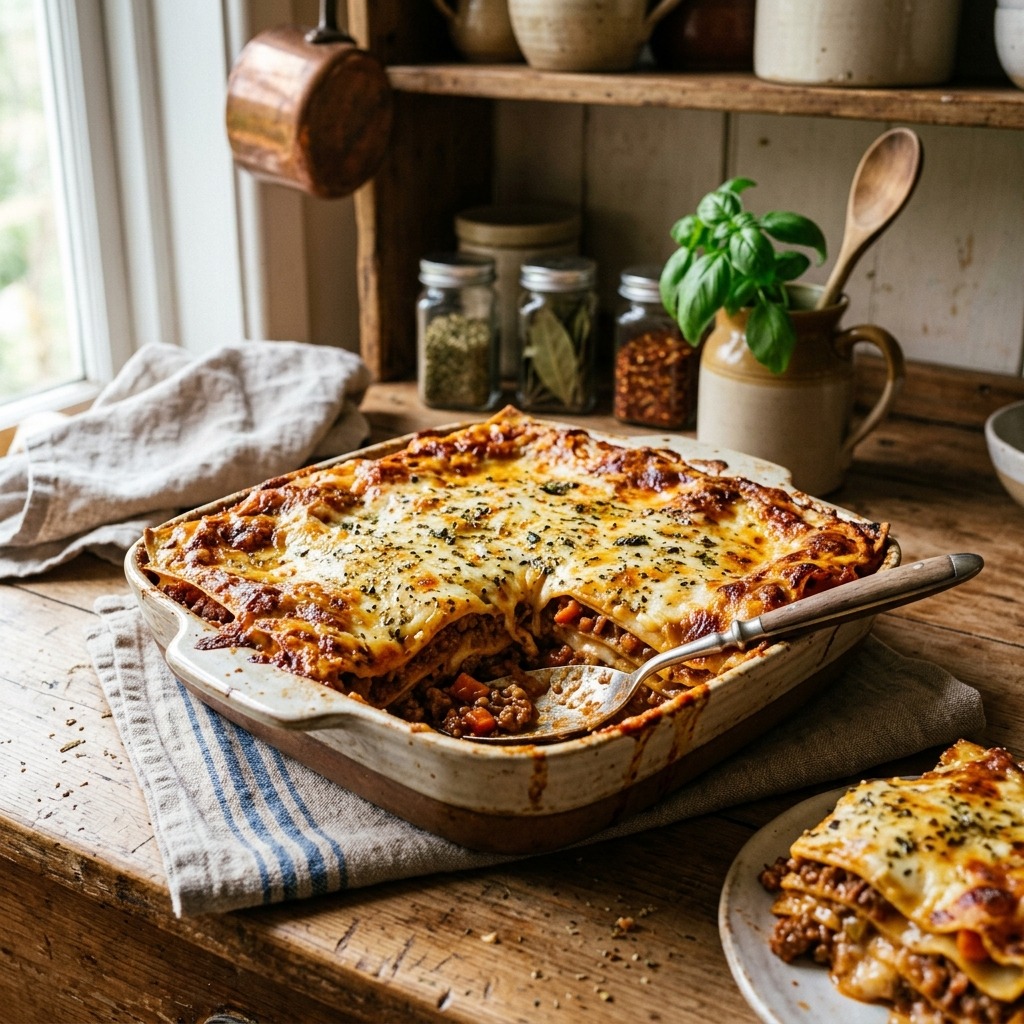
Mary Berry's lasagne layers a rich beef ragù, silky béchamel sauce, and tender pasta sheets, then bakes everything until golden and bubbling. The dish is famous for its creamy texture, deep savory flavor, and beginner-friendly method. It stays popular because it's reliable, freezer-friendly, and perfect for feeding a hungry family.
There's a reason Mary Berry's lasagne has become a go-to for home cooks across the UK. It balances a slow-cooked meat sauce with a smooth, well-seasoned béchamel with no fancy equipment, no complicated steps. Just honest, hearty food that tastes like it took all day (even when it didn't).
Quick recipe overview
| Detail | Information |
|---|---|
| Prep time | 30 minutes |
| Cooking time | 45 minutes (plus ~1 hour for the ragù) |
| Total time | ~2 hours 15 minutes |
| Servings | 6 |
| Calories (per serving) | ~600–650 kcal |
| Difficulty | Easy to moderate |
| Best for | Family dinners, batch cooking, freezing |
What makes Mary Berry's lasagne special?
Mary Berry's version stands out for three reasons. First, the ragù simmers long enough to develop a deep, rich flavor without drying out. Second, her béchamel is smooth and generous, which keeps the whole dish moist and creamy. Third, the method is genuinely beginner-friendly. Every step is clearly defined, so even first-timers get great results.
A small detail makes a big difference here: Mary often adds a splash of crème fraîche or a handful of mozzarella to the top layer. This gives the finished lasagne a luxurious, golden, slightly tangy crust that plain béchamel alone can't match.
What ingredients are in Mary Berry lasagne?
Quality ingredients matter. Use good beef mince (around 15% fat for flavor), fresh garlic, and a strong, mature cheddar or Parmesan for the best results.
For the meat sauce (ragù)
- 2 tbsp olive oil
- 1 large onion, finely chopped
- 2 garlic cloves, crushed
- 500g beef mince
- 2 tbsp tomato purée
- 400g tin chopped tomatoes
- 150ml beef stock
- 1 tsp dried oregano
- 1 tsp sugar (balances acidity)
- Salt and freshly ground black pepper
For the béchamel (white sauce)
- 50g butter
- 50g plain flour
- 600ml whole milk
- 1 tsp Dijon mustard (Mary's flavor booster)
- 75g mature cheddar, grated
- Pinch of nutmeg
- Salt and pepper
To assemble
- 8–10 dried lasagne sheets
- 50g Parmesan, grated
- Optional: 2 tbsp crème fraîche or 125g mozzarella for the top
What equipment do you need?
| Equipment | Purpose |
|---|---|
| Large frying pan or saucepan | Cooking the ragù |
| Medium saucepan + whisk | Making lump-free béchamel |
| Ovenproof dish (~20cm x 30cm) | Baking the lasagne |
| Wooden spoon | Stirring and breaking up mince |
| Box grater | Cheese and nutmeg |
How do you make the meat sauce?
The ragù is the heart of the dish. Don't rush it; a longer simmer means richer flavor.
- Heat the oil in a large pan over medium heat. Add the onion and cook for 5 minutes until soft and translucent.
- Add the garlic and cook for 1 minute until fragrant. (Don't let it brown, or it turns bitter.)
- Brown the mince. Turn up the heat, add the beef, and break it up with a wooden spoon. Cook for 6–8 minutes until no pink remains.
- Stir in the tomato purée and cook for 1 minute to deepen the flavor.
- Add the chopped tomatoes, stock, oregano, and sugar. Season well.
- Simmer gently for 45 minutes to 1 hour, stirring occasionally, until thick and glossy. The sauce should hold its shape on a spoon, not run. Visual cue: When the ragù looks rich and most of the liquid has reduced, it's ready.
How do you make the perfect béchamel?
A smooth béchamel is what separates a great lasagne from a gluey one. The trick is constant whisking and gradual milk.
- Melt the butter in a saucepan over low-medium heat.
- Add the flour and whisk to form a paste (a roux). Cook for 1–2 minutes and this removes the raw flour taste.
- Add the milk gradually, a splash at a time, whisking constantly to avoid lumps.
- Keep stirring until the sauce thickens and coats the back of a spoon (about 5 minutes).
- Remove from heat and stir in the Dijon mustard, grated cheddar, nutmeg, salt, and pepper.
How do you assemble lasagne for the best layers?
Good layering keeps the lasagne stable and evenly cooked. Aim for thin, even layers rather than thick ones.
Layering order (bottom to top):
- Thin layer of meat sauce
- Lasagne sheets (don't overlap too much)
- Meat sauce
- A little béchamel
- Repeat until ingredients are used
- Finish with a generous béchamel layer
- Top with Parmesan (plus mozzarella or crème fraîche, if using)
What temperature and time do you bake lasagne at?
| Step | Setting | Time |
|---|---|---|
| Oven temperature | 180°C fan / 200°C conventional / 400°F | — |
| Baking time | Covered first, then uncovered | 40–45 minutes |
| Resting time | Out of the oven | 10–15 minutes |
Bake until the top is golden and the edges bubble. If the cheese browns too fast, cover loosely with foil. Always rest the lasagne before slicing this lets the layers set so they don't slide apart on the plate.
What are the best serving suggestions and wine pairings?
Mary Berry's lasagne is a meal in itself, but a few sides round it out beautifully.
- Crisp green salad with a sharp vinaigrette to cut the richness
- Garlic bread or warm ciabatta
- Steamed green vegetables like broccoli or green beans
Wine pairing: A medium-bodied red works best. Try Chianti, Sangiovese, or a Montepulciano d'Abruzzo. Prefer white? A dry Italian white like Pinot Grigio is a lighter match.
How can you adapt the recipe for dietary needs?
This recipe is easy to customize. Here are tested swaps:
| Dietary need | Substitution |
|---|---|
| Gluten-free | Use gluten-free lasagne sheets and swap plain flour for cornflour or GF flour blend |
| Dairy-free | Use plant butter, oat or soy milk, and dairy-free cheese |
| Vegetarian | Replace mince with lentils, mushrooms, or a plant-based mince |
| Lower-calorie | Use 5% fat mince, semi-skimmed milk, and less cheese |
| Extra creamy | Add crème fraîche to the béchamel or layer in mozzarella |
Mary Berry lasagne with mozzarella
For a stretchier, more indulgent top, scatter 125g of torn mozzarella over the final béchamel layer before baking. It melts into golden, bubbly pockets that pair perfectly with the creamy white sauce.
Mary Berry lasagne with crème fraîche
Swap part of the béchamel for crème fraîche, or stir 2 tablespoons into the finished white sauce. This adds a gentle tang and an extra-silky texture, a lighter shortcut when you're short on time.
What are common lasagne mistakes (and how do you avoid them)?
Even simple lasagne can go wrong. Here are the most common pitfalls:
- Watery lasagne: The ragù wasn't reduced enough. Simmer longer until thick.
- Lumpy béchamel: Milk added too fast. Whisk constantly and add it gradually.
- Hard pasta edges: Sheets weren't fully covered in sauce. Make sure every sheet touches liquid.
- Sloppy slices: You skipped the rest. Let it sit 10–15 minutes before cutting.
- Bland flavor: Under-seasoned ragù. Taste and adjust salt as it cooks.
How do you make this ahead, store, and freeze it?
| Method | How | How long |
|---|---|---|
| Make ahead | Assemble fully, cover, refrigerate before baking | Up to 24 hours |
| Refrigerate (cooked) | Cool, cover, chill | Up to 3 days |
| Freeze (uncooked or cooked) | Wrap well, freeze | Up to 3 months |
| Reheat | Oven at 180°C until piping hot throughout | 25–30 minutes |
For another comforting British centerpiece that uses a similar creamy egg-and-cheese custard technique, try Mary Berry's Cheese and Onion Quiche — a vegetarian classic with the same silky sauce sensibility.
Frequently asked questions
What is the secret ingredient in Mary Berry's lasagne?
The standout is Dijon mustard stirred into the béchamel. It enhances the cheese flavor without tasting mustard. Many cooks also add crème fraîche for extra silkiness.
How many calories are in Mary Berry's lasagne?
A standard serving (one of six portions) contains roughly 600–650 calories. Using lower-fat mince, semi-skimmed milk, and less cheese can reduce this to around 450–500.
What is the cooking time for Mary Berry's lasagne?
The lasagne bakes for 40–45 minutes at 180°C fan. Add about 1 hour for simmering the ragù, giving a total cooking time of roughly 1 hour 45 minutes.
Can I make Mary Berry's lasagne ahead of time?
Yes. Assemble it fully and refrigerate for up to 24 hours before baking. You may need to add 5–10 minutes to the cooking time if baking it straight from the fridge.
Can you freeze Mary Berry's lasagne?
Yes. Freeze it either cooked or uncooked for up to 3 months. Wrap it tightly to prevent freezer burn, then defrost overnight in the fridge before reheating.
Do you need to pre-cook lasagne sheets?
No. Standard dried lasagne sheets soften as the dish bakes, as long as they're surrounded by enough sauce. Pre-cooking isn't necessary for this recipe.
Why is my lasagne watery?
Watery lasagne usually means the meat sauce wasn't reduced enough. Simmer the ragù until thick and glossy, and avoid adding extra liquid during assembly.
What's the best cheese for lasagne?
Mature cheddar and Parmesan give the most flavor. For a stretchier, melty top, add mozzarella. A mix of all three delivers the best balance of taste and texture.
Can I make a vegetarian version?
Yes. Swap the beef mince for lentils, finely chopped mushrooms, or plant-based mince. Keep the béchamel and seasoning the same for that classic flavor.
How long should lasagne rest before serving?
Let it rest 10–15 minutes after baking. This helps the layers set, so each slice holds its shape instead of sliding apart on the plate.
Mary Berry's Lasagne
Ingredients
For the ragù
- 2 tbsp olive oil
- 1 large onion, finely chopped
- 2 garlic cloves, crushed
- 500g beef mince
- 2 tbsp tomato purée
- 400g tin chopped tomatoes
- 150ml beef stock
- 1 tsp dried oregano
- 1 tsp sugar
- Salt and freshly ground black pepper
For the béchamel
- 50g butter
- 50g plain flour
- 600ml whole milk
- 1 tsp Dijon mustard
- 75g mature cheddar, grated
- Pinch of nutmeg
- Salt and pepper
To assemble
- 8–10 dried lasagne sheets
- 50g Parmesan, grated
- Optional: 2 tbsp crème fraîche or 125g mozzarella for the top
Instructions
- Make the ragù: Heat the oil and soften the onion for 5 minutes. Add garlic for 1 minute. Brown the mince for 6–8 minutes, breaking it up. Stir in the tomato purée for 1 minute. Add chopped tomatoes, stock, oregano, and sugar. Season and simmer gently for 45 minutes to 1 hour until thick and glossy.
- Make the béchamel: Melt the butter, whisk in the flour, and cook the roux for 1–2 minutes. Add the milk gradually, whisking constantly, until thick and coating the back of a spoon (about 5 minutes). Off heat, stir in the Dijon, cheddar, nutmeg, salt, and pepper.
- Assemble in layers: Spread a thin layer of meat sauce in the ovenproof dish. Top with lasagne sheets, more meat sauce, a little béchamel, and repeat. Finish with a generous layer of béchamel and Parmesan (plus mozzarella or crème fraîche if using).
- Bake: Preheat the oven to 180°C fan / 200°C conventional / 400°F. Bake for 40–45 minutes until golden on top and bubbling at the edges. Cover loosely with foil if browning too fast.
- Rest and serve: Let the lasagne rest 10–15 minutes before slicing so the layers set. Serve with a crisp green salad or garlic bread.